Computer Graphics Master Academy
I took the Level Design on Games course at CGMA. Max Pears taught the course with lectures from Emilia Schatz.
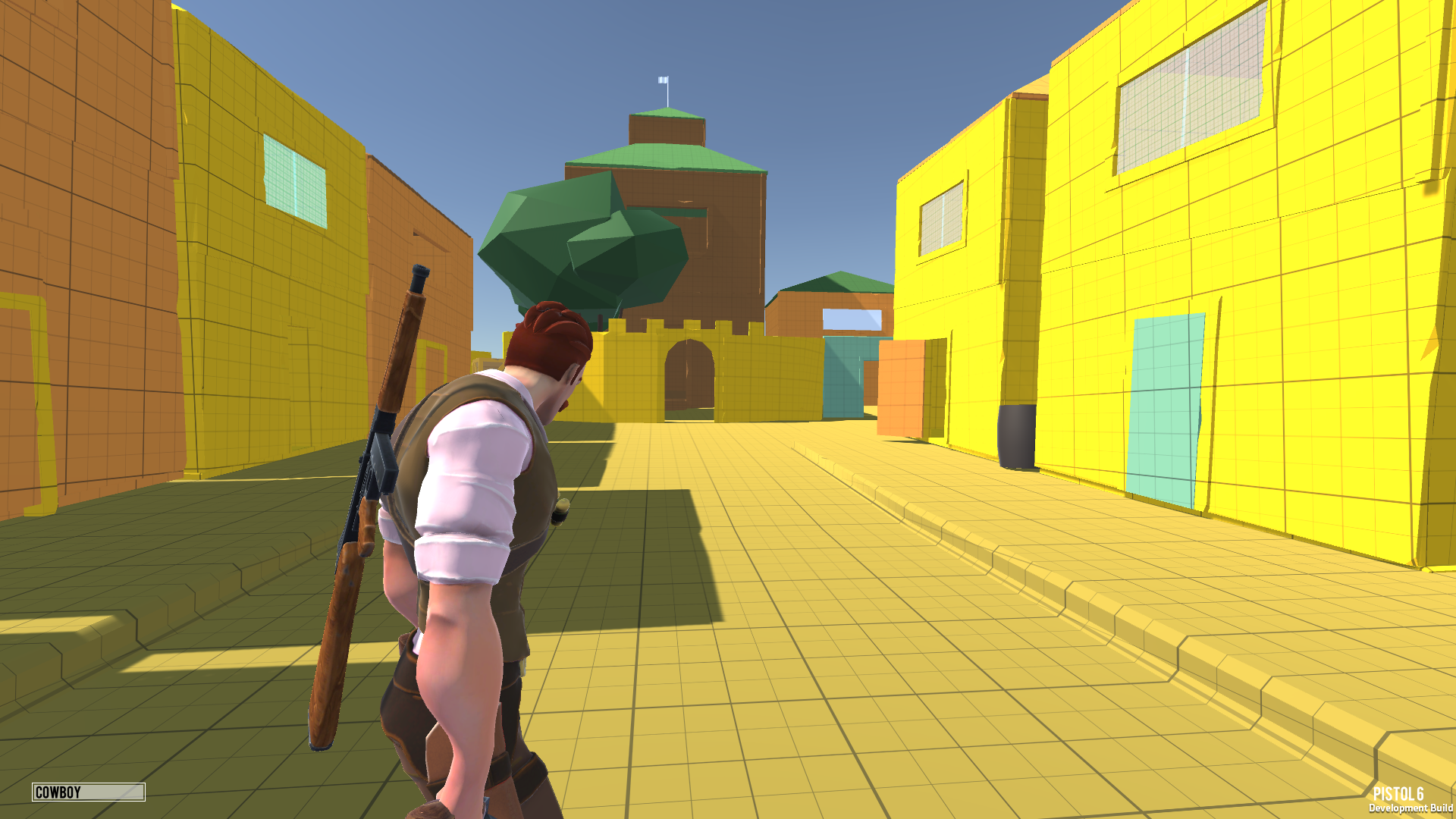
Week 1
What We Learned:
In Week 1, we learned about the role of space in Level Design. Setting the stage with boundaries, utility/denial, context, defining a language, speaking to the player, and variation.
Assignment:
Create a level based on concept art by honoring the piece: Henri Matisse, “Street in Arcueil.”
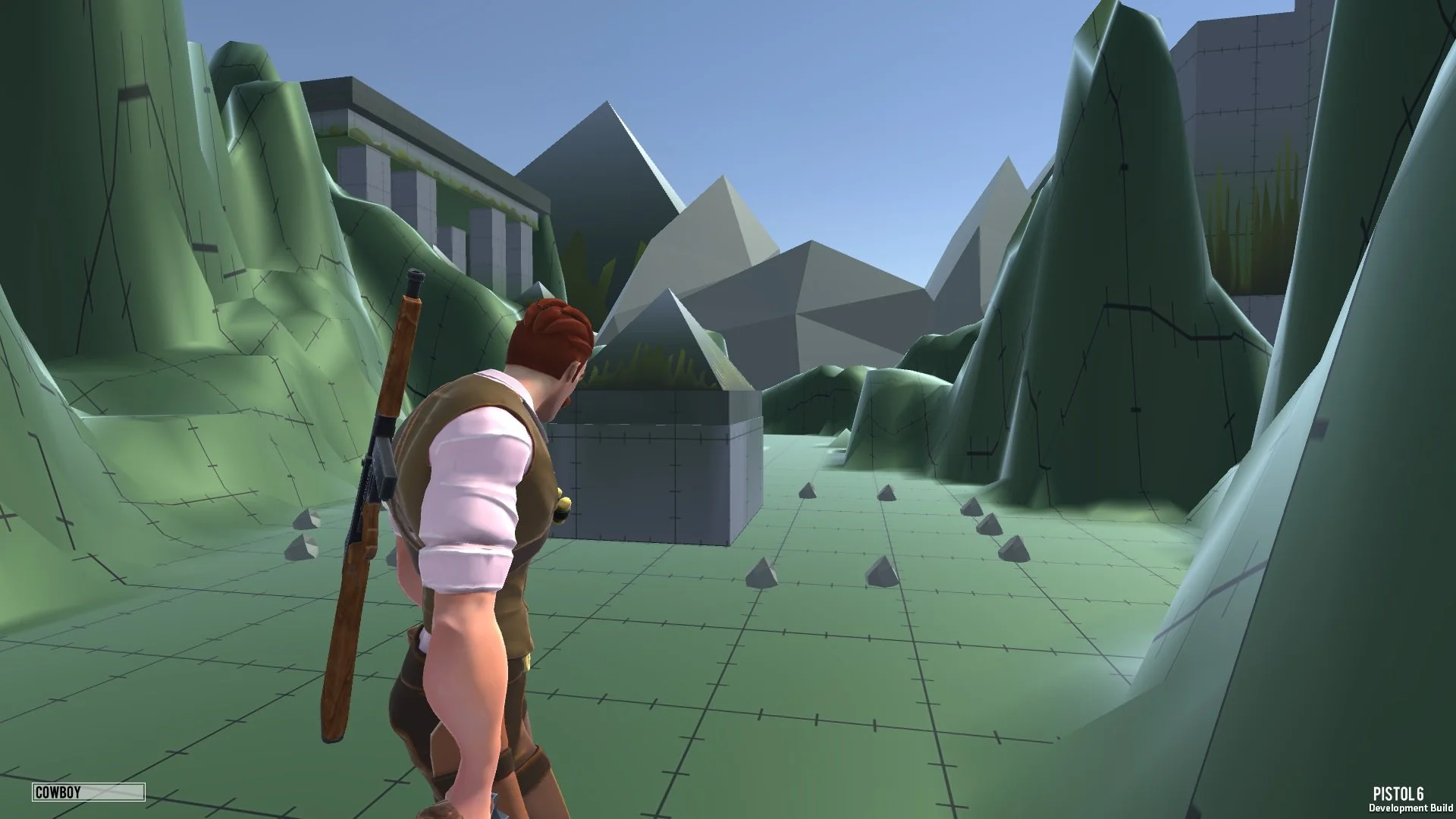
Week 2
What We Learned:
In Week 2, we learned about Space Theory and grasping the concept of how positive and negative space occupies & defines an area.
Assignment:
Create a level that uses shapes to guide the player through a space, to explore, and look around. Use only the provided prefabs to create a level to find the treasure chest.
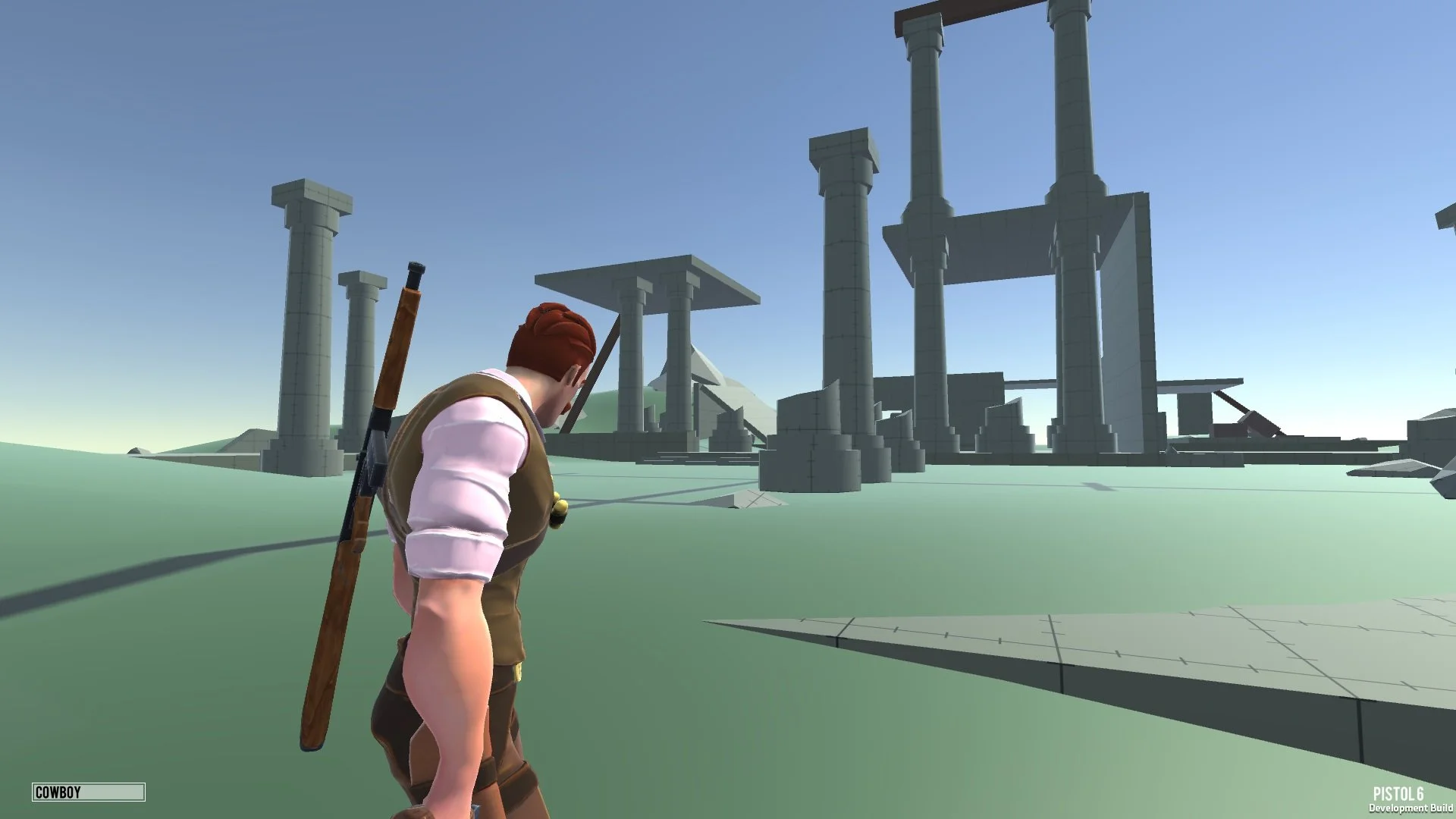
Week 3
What We Learned:
In Week 3, we learned about building shapes and how the structures of cities and buildings are constructed to map a space for the player. We also learned how level designers can create environments that communicate their purpose to players.
Assignment:
Create a level that portrays old ruins with a limited number of meshes. In the level, create room subdivisions, implied space, vague space, some well-articulated spaces, and edge bleeding.
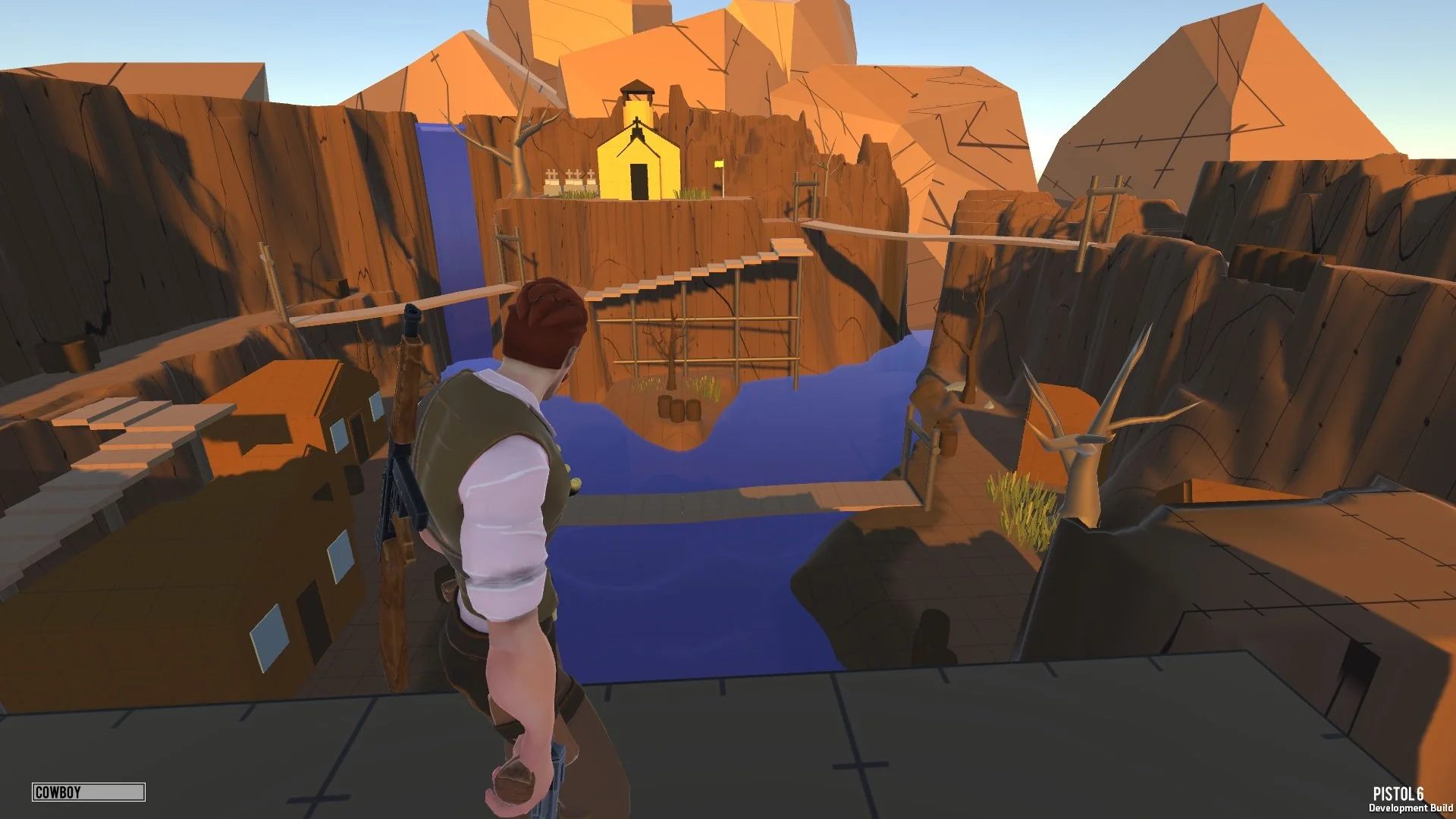
Week 4
What We Learned:
In Week 4, we learned about how level designers study & research, gather references, and create prototypes that lead up to the creation of their levels. We learned how to look at reference and pick out what evokes a sense of place and atmosphere; In order to do that, we had to get our heads immersed in the game's universe.
Assignment:
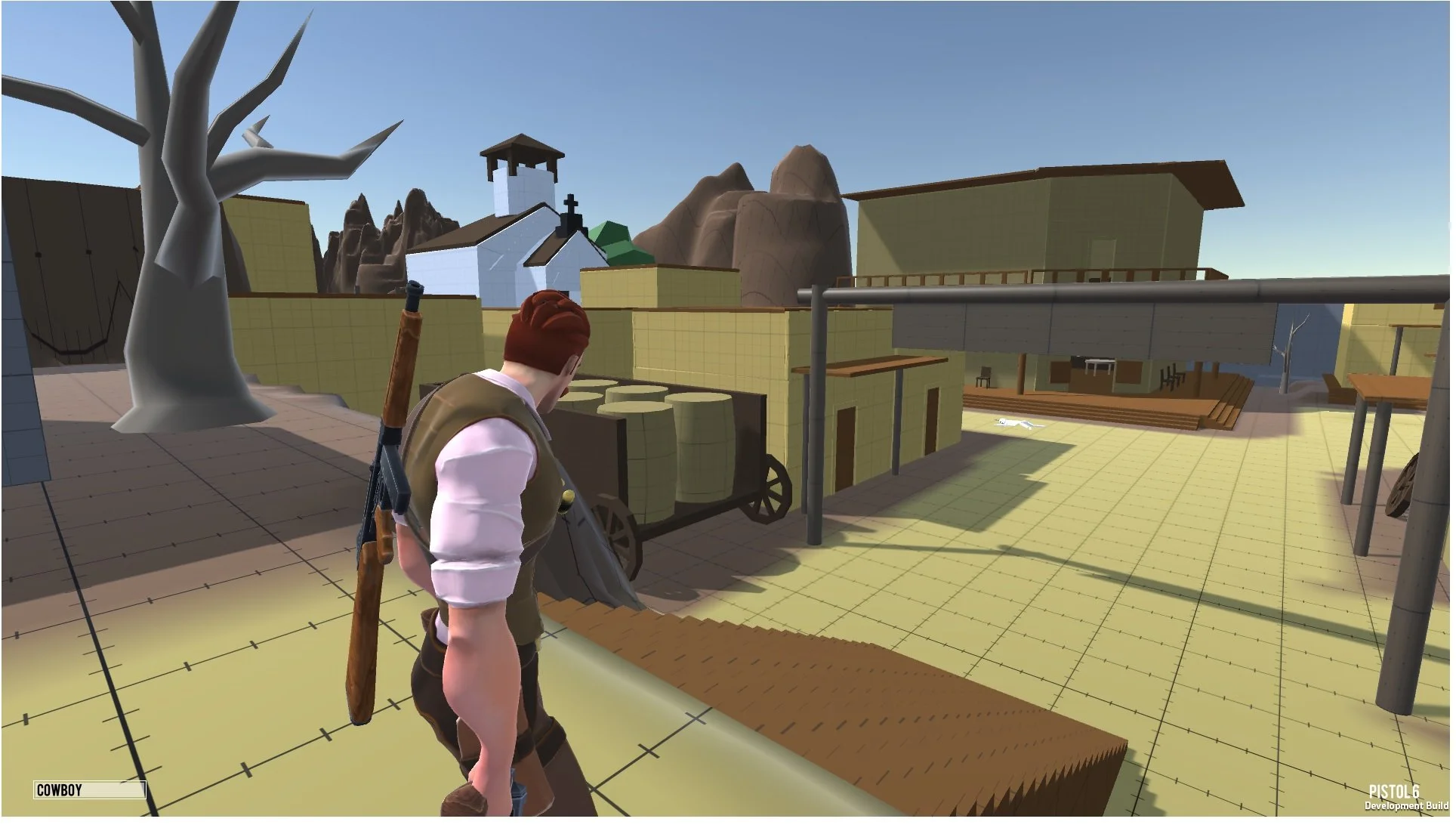
Create a scene inspired by a screenshot from Desperados! Wanted Dead or Alive.
Week 5
What We Learned:
In Week 5, we learned about how spaces are constructed regarding narrative and performative techniques. We looked at beat diagrams, pacing, and examined how levels flow from space to space in support of narrative and character development.
Assignment:
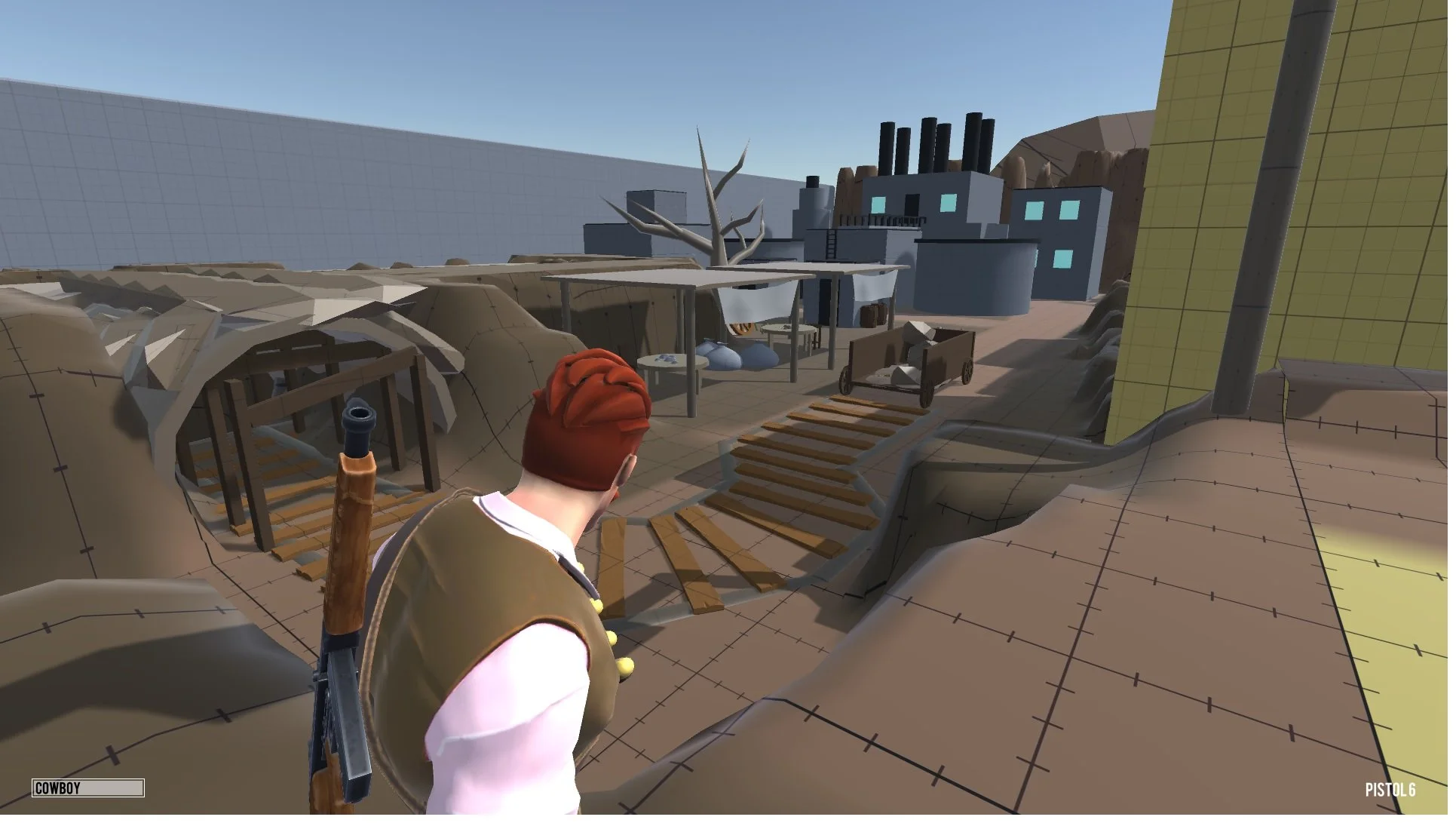
Create a spatial cluster within a “Ghost” town with the gameplay purpose of figuring out the mystery, exploring, and finding out what happened.
Week 6
What We Learned:
In Week 6, we learned about Cognitive Mapping and setting up elements of a city with paths, edges, districts, nodes, and landmarks.
Assignment:
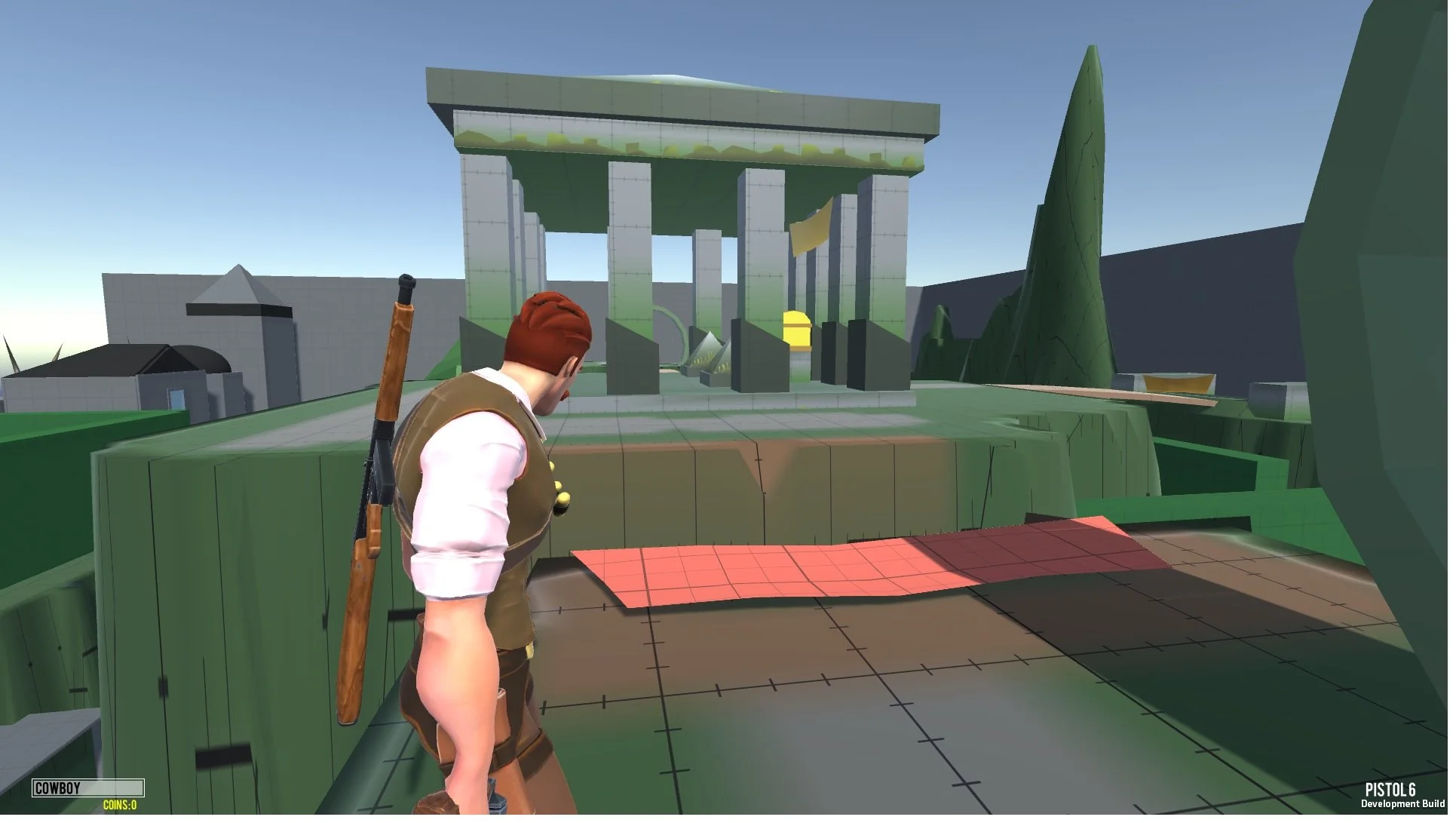
Using the level from the previous week, add additional sections into the town to create recognizable districts.
Week 7
What We Learned:
In Week 7, we learned about risk vs reward, affordance/denial, and how these concepts shape player choices.
Assignment:
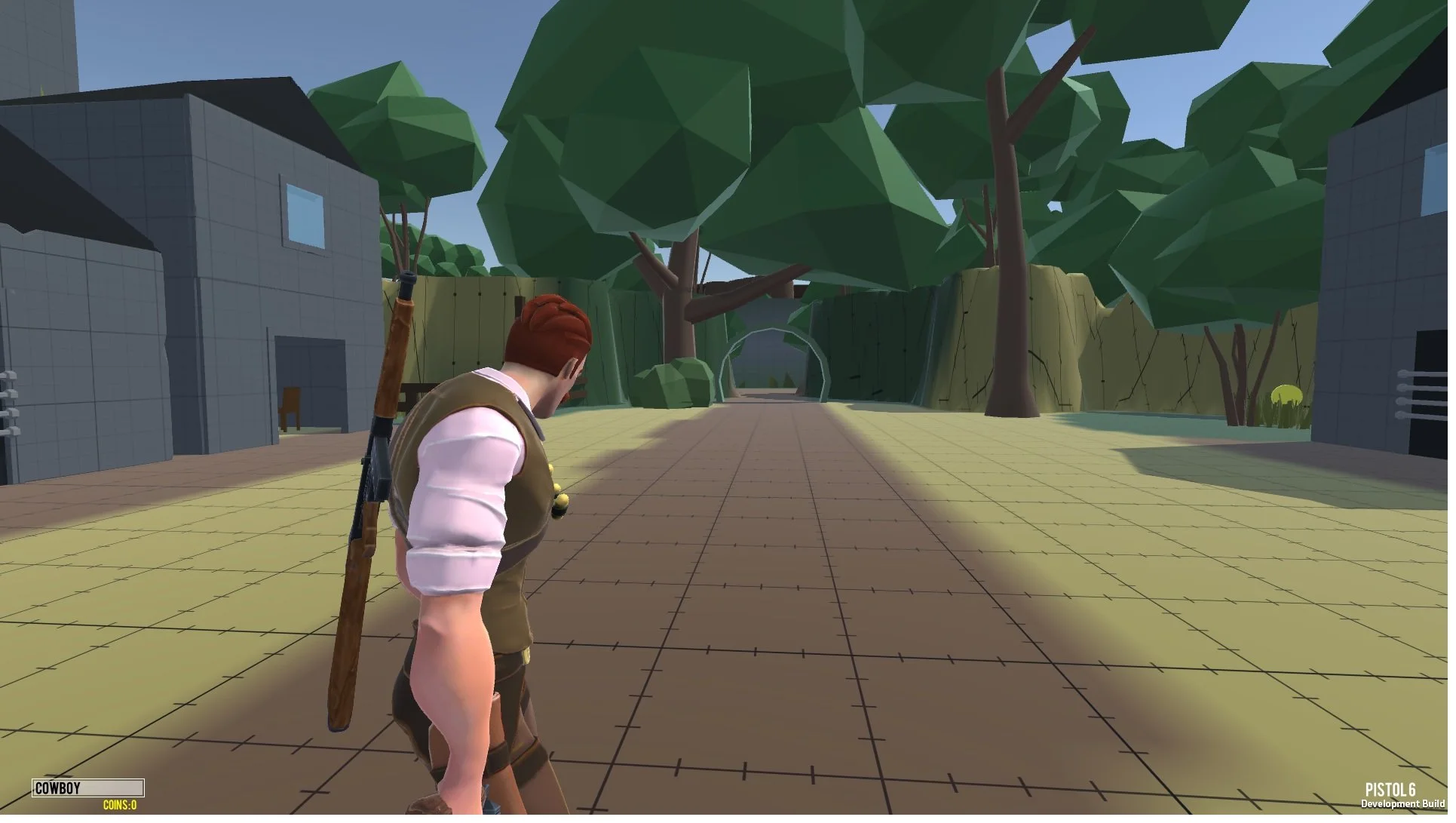
Create a non-linear maze-like space to find a treasure.
Week 8
What We Learned:
In Week 8, we learned about Emotive Design, Space Types: Prospect, Narrow & Intimate, Depressed vs Elevated. We also learned about shape language, visual contrast, matching narrative tone, and path junctures.
Assignment:
Create a labyrinth. A labyrinth, although it looks like a maze, is linear. Create a fairly linear pathway, while giving some reversals, and change the tone of enviornment. Create different districts, have different path junctures, different environmental values, and different space types.
Week 9
What We Learned:
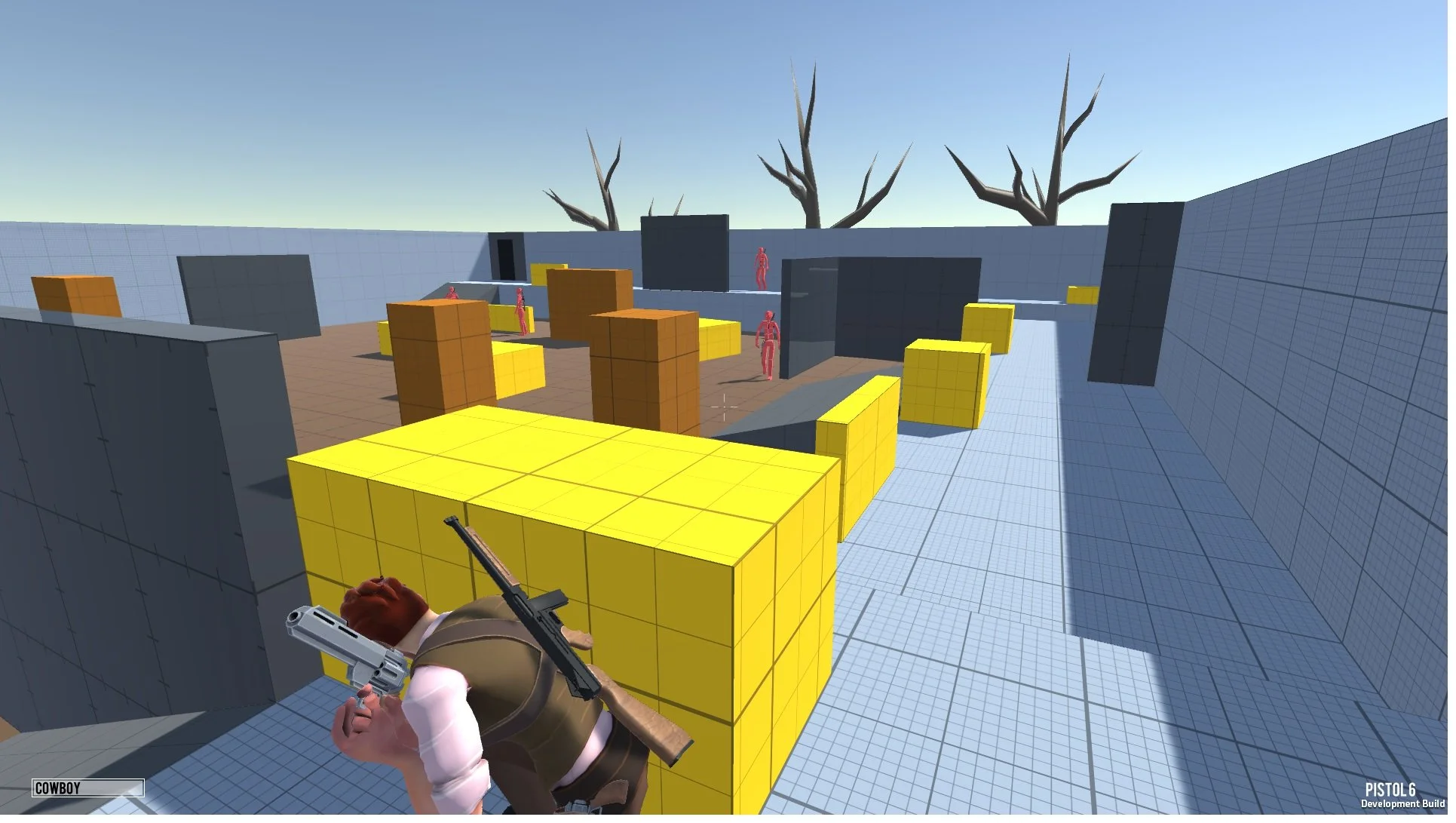
In Week 9, we focused on combat design, a concept that is featured in many games. Specifically, we looked at cover-based shooter mechanics, as well as took a look at what considerations go into creating multiplayer deathmatch-style arena maps.
Assignment:
Create 3 different combat spaces.
Week 10
What We Learned:
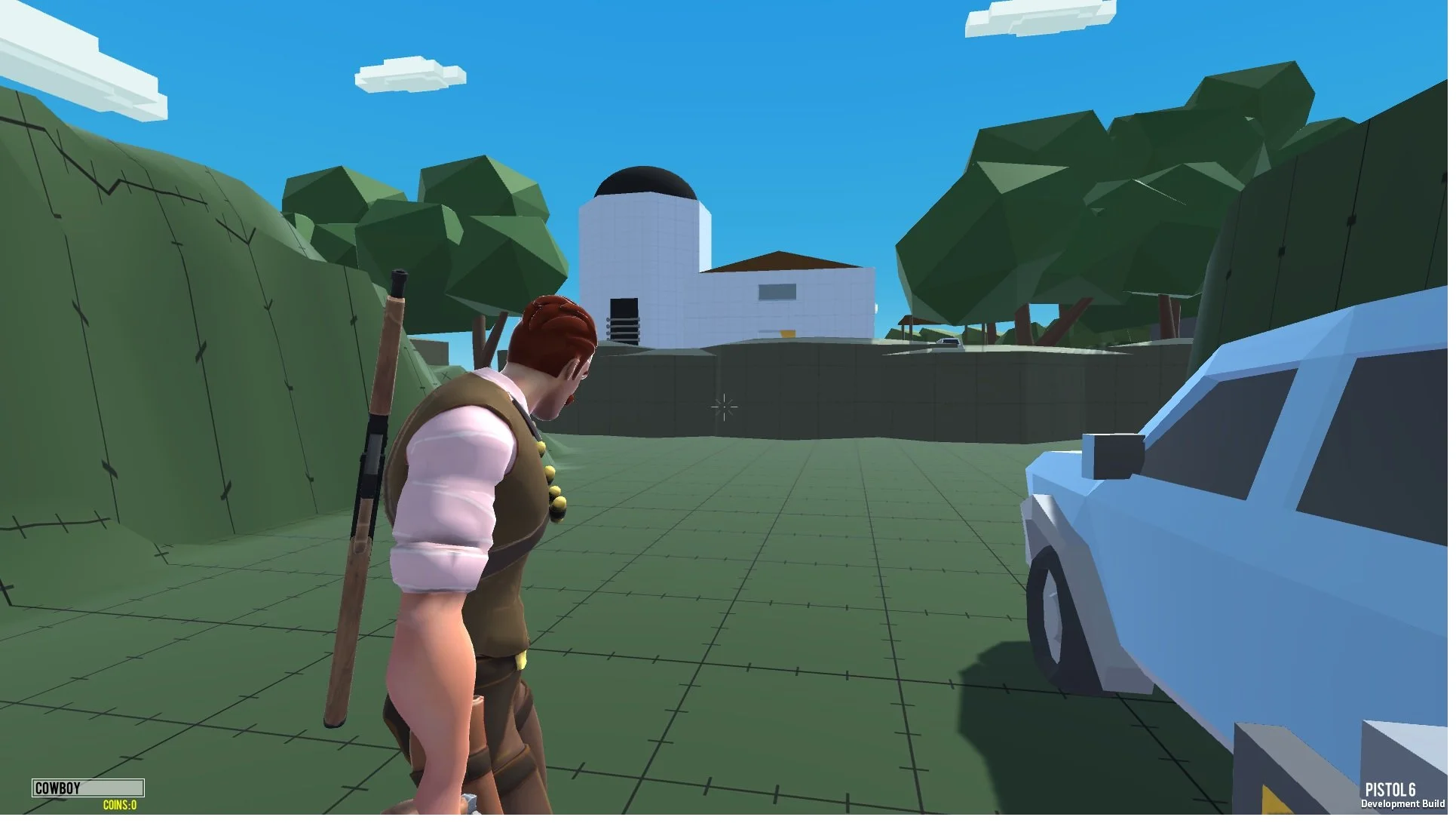
In Week 10, our last week, we tied up some loose ends about combat by taking a look at how to valve players into a combat scenario, as well as constructing a journey for the player.
Assignment:
For the final assignment, using everything we learned from the previous weeks, create a mini-level. In this level, the player will explore, take part in small combat, explore, enter large combat, and find the Treasure at the end.